
Intervertebral discectomy – Microdiscectomy

Description intervertebral discectomy
The intervertebral discs are located between each vertebra. When damaged, these discs can put pressure on nerves, which take place in the spinal cord. Intervertebral discotomy – spinal surgery, which removes all or part of the disc. The procedure is most often performed on lumbar disc (located in the lower back area). Also, the procedure to be done on cervical discs in the neck. There are two methods of carrying out this operation,:
- Open procedure – This one large incision;
- Microdiscectomy – performed small incisions, through which the doctor inserts a special miniature surgical instruments.
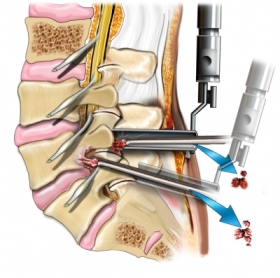
Reasons for intervertebral discectomy
Disks serve as a pad between the bones of the spine. Drives may be damaged or dry with age. Trauma can lead to disc protrusion (hernia). These changes may create pressure on the nerves in the spine, What caused the pain, numbness and weakness.
The best time for this surgery is controversial, because, some patients, who had early surgery, it has not led to a reduction or elimination of pain disability. In most cases, the operation is performed only after, other treatments have failed. Other treatments, usually, include:
- Recreation;
- Physiotherapy;
- Medications.
The goal of surgery is to eliminate pain, weakness, numbness, caused by pressure on a nerve disc. You can feel the relief immediately, or it may take several months, has not yet healed the nerve roots. In some cases the symptoms are not improved. The doctor carefully assess your condition before surgery, to determine the best variant of its holding.
Possible complications of intervertebral discectomy
Complications are rare, but no procedure does not guarantee the absence of risk. Before, how to perform a discectomy intervertebral, you need to know about possible complications, which may include:
- Bleeding;
- Infection;
- Nerve Damage;
- Urinary bladder or intestine;
- Leakage of cerebrospinal fluid;
- Herniated disk (It may occur during the first three months after surgery).
Factors, that may increase the risk of complications:
- Chronic diseases (eg, diabetes);
- Previous spinal surgery;
- Advanced age;
- Smoking.
How is the intervertebral discectomy?
Preparation for the procedure
Your doctor may conduct the following:
- Medical checkup;
- Ask about the start time and location of pain;
- MRT – test, which uses magnetic waves, to make pictures of structures back;
- Discography – test is used to detect a herniated disc. It involves injecting a contrast agent into the disc in the spine and perform X-rays, to determine whether problems.
Before the procedure:
- Consult your doctor about the drugs taken. A week before surgery you may be asked to stop taking some medicines:
- Anti-inflammatory drugs (eg, aspirin);
- Blood thinners, such as clopidogrel, or warfarin;
- We need to organize a trip for the operation and back home. Besides, we need to agree with someone, to help you at home during recovery;
- You can eat a light meal the evening before surgery. Do not eat or drink anything after midnight;
- Wear comfortable clothing to the hospital.
Anesthesia
It will be used general anesthesia. It will block any pain and puts the patient to sleep for the operation.
Procedure intervertebral discectomy
There are various types of surgical intervention, including:
Anterior cervical discectomy
The incision is made in the skin on the left or right side of the neck. Doctor pushing muscles, to achieve spine. Cloth disk will be removed after, the doctor uses X-ray, and make sure, that the correct drive. Part of bones can be removed, to release the nerve. To protect the bones of the spine, bone transplant can be installed.
Rear cervical discectomy
The cut will be made on the skin behind the neck. The muscles will be pushed aside. A small piece of bone is removed, to get to the desired location on the disk (laminectomy). The doctor then removes the nerve aside and remove the disc material.
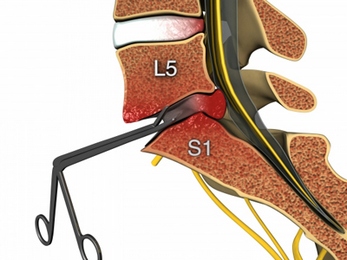
Lumbar discectomy
The doctor will make 2-4 cm incision of the skin on the lower back. Muscles are moved towards. A small portion of the bone, perhaps, You have to remove, to gain access to the nerves and disks. Then the disk disk will be removed.
How long will the intervertebral discectomy?
This depends on the following:
- Method, which is used by the doctor (open or minimally invasive);
- Transaction type.
For Example, minimally invasive surgery may take longer, but the recovery is faster.
Will it hurt?
The pain will be felt during recovery. The doctor will give you pain medicine.
The average hospital stay
This operation is usually performed in a hospital. Sometimes it is possible to go home the day of surgery. If carried cervical discectomy, perhaps, I have to stay in the hospital for a few days.
Care after intervertebral discectomy
Follow your doctor's instructions. Bends, weight lifting or twisting may be limited for six weeks. You will work with a physical therapist, to stretch and strengthen muscles. This will help reduce the risk of future problems.
Ask your doctor about, when it is safe to shower, bathe, or to expose the surgical site to water.
Contact your doctor after intervertebral discectomy
After returning home, you need to see a doctor, If the following symptoms:
- Signs of infection, including fever and chills;
- Redness, edema, increased pain, bleeding, or any discharge from the incision;
- Numbness or tingling;
- Pain, which does not pass after taking pain medication appointed;
- Pain, burning, frequent urination or persistent bleeding in the urine;
- Cough, shortness of breath or chest pain;
- Urinary bladder or intestine.
