
Power mode and nursing mothers

A balanced diet is the basis of nursing harmonious growth and development of the child, and to maintain the health of the mother.
Compliance with a rational diet, favorable environment life combined with sufficient rest and walks will help preserve the health of the mother and thus ensure the baby in the first months of life full of high-quality food, What is the breast milk, so necessary for children of this age.
Food should be nursing the most complete and varied in quality and quantity of nutrients, contain a sufficient amount of various mineral salts and vitamins. Qualitatively defective, monotonous diet affects the composition of milk, and hence – the child's development. The amount of breast milk and its quality depends on many factors, the main one – nutrition nursing mother.
Dieting during breastfeeding is not recommended.
Dietary energy as compared with the second half of pregnancy should be increased by 700-1000 kcal, as the mother consumes the nutrients in the milk production.
The average daily milk production in the vast number of women ranges from 850 to 1200 ml. Considering the content of protein in the milk, it could be considered, that the nurse daily devotes about 15,0 g protein. In production 1,0 g protein breast milk requires about 2,0 g protein foods. Therefore, the protein content in the diet of breastfeeding, It must be increased by approximately 30-40 g and not less than 110-120 g. Several daily demand increases and breast-feeding in fats (to 120 g), carbohydrate (to 500-520 g).
Overeating adverse effect on lactation.
Women, breast-feeding, it is recommended to eat several times a day, but small portions. It is advisable to eat and drink a little bit of fluid immediately before feeding baby – considered, that from such a meal the amount of milk produced will be more.
The recommended diet of nursing mothers
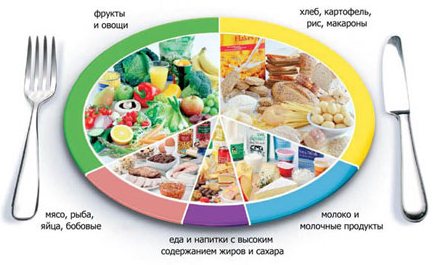
Food should be full by the quantity and quality of nutrients, contain a sufficient amount of various mineral salts and vitamins. Need mothers for vitamins significantly higher than the normal physiological norm, therefore an imbalance in nutrition nursing mother can lead to vitamin deficiency and her child. The daily need of nursing in vitamins and minerals averages: 2,5 mg vitamin A, 2,5 mg vitamin B1, 3,5 mg of vitamin B6, 120 mg of vitamin C, 25 mg of vitamin PP, 4 mg of vitamin B, 500 MO. vitamin D, 1,8-2,0 g of calcium, 3,8 g of phosphorus, 1,25 g of magnesium.
Approximately one third of the required daily amount of vitamin A provides products, containing vitamin itself, and the remaining two-thirds – carotene. In the winter-spring season, when the diet a little fresh fruit and vegetables, often there is a lack of vitamin C, A and E. Currently, it is advisable to take special vitamin supplements prescribed by a doctor (especially in the spring). Especially widely used drugs should ascorbic acid.
Vitamin C contained in black currants, shypovnyke, feather, cabbage, potato, etc.. Do not be afraid gipervitaminizatsii baby through the mother's milk as a result of taking vitamins, since the transition to the milk of most vitamins is limited.
At the moment, the practice of introducing additional vitamins baby through the mother's milk seems to be even more physiologically grounded, correction of vitamin deficiencies than by the early introduction of the child different juices.
Menu nursing should not be monotonous, because, as indicated above, qualitative malnutrition affects milk composition, and hence – the child's development. Mothers are also encouraged to adhere monodiets (diet, which involves only one maternal nutrition in some product), even for a short time. This can lead to a reduction in a woman's breast milk and the amount of proteins, fat, carbohydrates and vitamins. Consequently – the child refuses the breast and have to switch to artificial feeding, which may lead to problems of the gastrointestinal tract in a child.
Mandatory part of the diet of breastfeeding, shall be milk or dairy products, who are the main sources of calcium and phosphorus. Calcium is needed for normal functioning of the cardiovascular and other systems of the body. Do not do without the calcium and bone system. It is because of lack of calcium in young children there is such a dangerous disease, how rickets. To maintain a balance of minerals should be consumed daily about 600 ml of milk or fermented milk products and 50 g cheese. Besides 4 main meals desirable to receive two additional milk before feeding.
Dairy products – kefir, ryazhenka – helps to better the "work" of the intestine, improve digestion. In nursing mothers in the diet that includes dairy products, baby less likely to suffer from constipation. However, the use of fermented milk and dairy products also need to know when to stop.
Typically, the mother-nurse should receive mixed feed, containing a sufficient amount of fresh fruits and vegetables, necessary for the good functioning of the digestive and intestinal systems of the body. Also, vegetables and fruits – source of vitamins and minerals.
It is mandatory the use of meat, fish and eggs. Meat is desirable to choose not fat – veal, white meat of poultry. The fish is also desirable to choose not fat – Hek, zander, Pollack et al.. The preferred way of cooking meat and fish – decoction and over steam, but in any case is not hot.
Talking about nutrition nursing mothers, not to mention the whole role of the liquid. From the amount of fluid consumed directly affects the amount of milk produced. Nursing as a whole day is needed to 2-2,5 l water, includes the consumption of milk and milk products, the liquid part of the first dishes, compotes, pickled, juices and the like.
The use of natural juices during breast
Usually, experts recommend breastfeeding to enter into the diet of apple juice, and only green apple juice. It should refrain from the use of grape, tomato, Citrus juices.
One of the basic principles of nutrition breastfeeding – the gradual introduction of foods, that, one side, the body needs, with another – may cause trouble kid. Especially this principle concerns the power feeding, a child under the age of 3-4 months, during children's colic and other intestinal disorders in the baby.
Products, who should not eat a nursing mother
To avoid accidentally harm your baby breast-feeding, It encouraged to develop your own menu with all the potentially dangerous products.
Limit the number of products, can cause fermentation in the gut: grapes, sugar, confectionery and sweets.
From the menu, it is desirable to exclude salted, smoked and meat dishes, canned food, pickles, pickles, dishes with lots of spices, do not use often bow, garlic (this may spoil the taste and reduce the amount of milk), coffee (if you, of course, want to, the baby was quiet and slept well), chocolate (he is very allergic and too invigorates, also lowers immunity), cucumbers, cheese and sauerkraut (It "kills" milk), tomatoes, grapes, mint (reduces the production of milk), whole milk, mushrooms, pulse, watermelons, melons, canned food (except fruit), oranges, tangerines.
Strong food allergens are peanuts, Strawberry, crayfish, shrimp, chocolate.
Even domestic apples, if they are present in large quantities in the diet of lactating mothers can cause severe allergic reactions in the child.
To ensure the normal breast-feeding should be strictly forbid use: carbonated drinks, especially, containing colorants and preservatives, any drinks, containing alcohol, including alcoholic.
