
Anal abscess and anal fistula

Description anal abscess
Anal abscess – pus-filled glandular cavity near the anus, or deep in the rectum or close to the opening of the anus. Eight – Nine people from 10 000 susceptible to this disease.
Causes of anal abscess
Abscesses occur, when bacteria affect mucus gland in the anus or rectum, causing blockage and damage to surrounding intramuscular tissue. The cause of the infection is unknown, because, usually, This area is not exposed to infection.
Risk factors for anal abscess
Factors, which increases the risk of anal abscess:
- Paul: male;
- Colitis or other inflammatory bowel disease (eg, Crohn's disease).
Symptoms of anal abscess
These symptoms may be caused by other diseases. You must inform your doctor, if they came any:
- If the abscess is close to the skin surface on the buttocks:
- Pain and tenderness at the location of the abscess;
- Visible redness and swelling;
- Fever;
- If the abscess is located deep in the rectum:
- Pain in the lower abdomen;
- Swelling in the rectum, which can be seen during examination of the rectum;
- Fever.
Anal abscesses may be accompanied by pain during bowel movement and inability to restrain stools.
Diagnosis of anal abscess
The doctor conducts a physical inspection, He asks about the symptoms. The doctor will be able to see an abscess near the surface of the skin, However, perhaps, need palpation of the rectum with a gloved finger, to determine the presence of a deeper abscess.
Treatment of anal abscess
Treatment consists of a cut abscess pus to exit, and its further drying. The operation is usually performed under local anesthesia. In rare cases, you may need a general anesthetic. After the operation, antibiotics may be prescribed, to prevent recurrence of infection.
Possible complications in the treatment of anal abscess
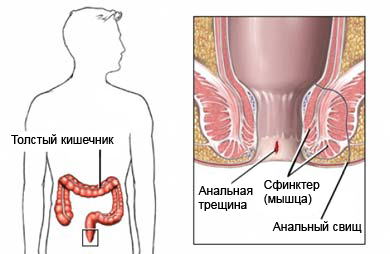
After drainage, or natural rupture of the abscess, more than half of developing anal fistula (fistula), normally passing through several weeks, but sometimes through several years. Fistula provides a continuous drainage of pus from the site of an abscess. If the fistula is large or does not heal, It recommended operation to its closure. After the operation, frequent recurrences of fistula, and fecal incontinence may occur.
Prevention anal abscess
There are no known ways to prevent anal abscesses or subsequent fistulas, because the unknown cause of the original infection of anal glands.
